
The Formula Book 方剂
归脾汤 guī pí tāng
Restore the Spleen Decoction · from Ji Sheng Fang, 1253
“For the studied-too-hard, worried-too-long pattern — when overthinking has drained both the digestion and the blood that feeds a settled mind.” — Lao Xinglin
What's in the pot
| Herb | Role | Classical amount |
|---|---|---|
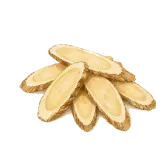 黄芪 huáng qí 黄芪 huáng qí |
Chief — tonifies qi, lifts what sags | 30 g |
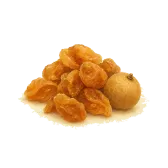 龙眼肉 lóng yǎn ròu 龙眼肉 lóng yǎn ròu |
Chief — nourishes blood, calms the spirit | 30 g |
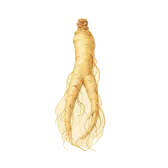 人参 rén shēn 人参 rén shēn |
Deputy — powers the qi engine | 15 g |
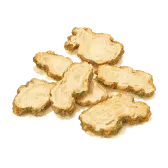 白术 bái zhú 白术 bái zhú |
Deputy — strengthens the spleen | 30 g |
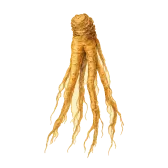 当归 dāng guī 当归 dāng guī |
Deputy — nourishes the blood | 3 g |
 茯神 fú shén 茯神 fú shén |
Assistant — quiets the heart (fu shen, the root-core poria) | 30 g |
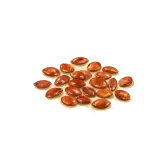 酸枣仁 suān zǎo rén 酸枣仁 suān zǎo rén |
Assistant — nourishes the heart, aids sleep | 30 g |
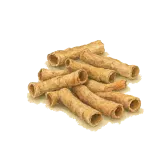 远志 yuǎn zhì 远志 yuǎn zhì |
Assistant — opens the heart orifices | 3 g |
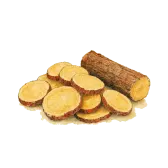
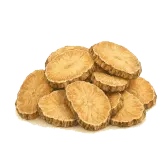 木香 mù xiāng 木香 mù xiāng |
Envoy — keeps the rich tonics moving | 15 g |
 炙甘草 zhì gān cǎo 炙甘草 zhì gān cǎo |
Envoy — harmonizes the whole | 8 g |
The pattern it treats
The tradition holds that thinking is work the spleen pays for — and that worry, overstudy, and rumination can overdraw the account until both qi and blood run short[1]. The resulting picture: fatigue, poor appetite, a pale face, palpitations, forgetfulness, and sleep that will not settle — the scholar's exhaustion, recorded in 1253 and instantly familiar to anyone with exams, deadlines, or a phone. Gui Pi Tang "restores the spleen" so the blood is replenished and the heart-mind has something to rest on[1]. The classical texts also reach for it in certain chronic bleeding patterns attributed to qi too weak to hold blood in its channels[1].
How the team works
Huang qi and longan flesh lead — one building qi, one building blood. Ginseng, white atractylodes, and dang gui deepen both campaigns; fu shen, sour jujube seed, and polygala settle the spirit the new blood is meant to anchor; a little aucklandia keeps this rich, sweet team from sitting heavily in a weak digestion; honey-fried licorice signs the prescription[1]. Brewed classically with a slice of ginger and a jujube date.
What the research says
Honestly: far less than for its famous cousin Xiao Yao San. Gui Pi Tang is widely prescribed in East Asia for insomnia, anxious fatigue, and poor memory, and small clinical studies exist — but there is no body of rigorous trials to summarize yet, so the case for it remains traditional rather than proven. When that changes, this page will too.
Where to be careful
A warm, rich, tonifying formula — the tradition itself withholds it during acute illness with fever, and in heat or phlegm-damp patterns[1]. Its herbs include ginseng and licorice; the cautions on those pages apply to the team they play for.
References
- Scheid, Bensky, Ellis & Barolet, Chinese Herbal Medicine: Formulas & Strategies, 2nd ed., Eastland Press, 2009. ↩
 Reviewed 2026-08-25